Social Media Intelligence & Competitive Analytics Dashboard for Enterprise Brands
- Home
- Case-Study
- Social Media Intelligence & Competitive Analytics Dashboard for Enterprise Brands
Project category
United States
4 Months
Ready To Monitor Brand Sentiment, Campaign Performance, And Competitor Moves In One Dashboard?
Project Overview
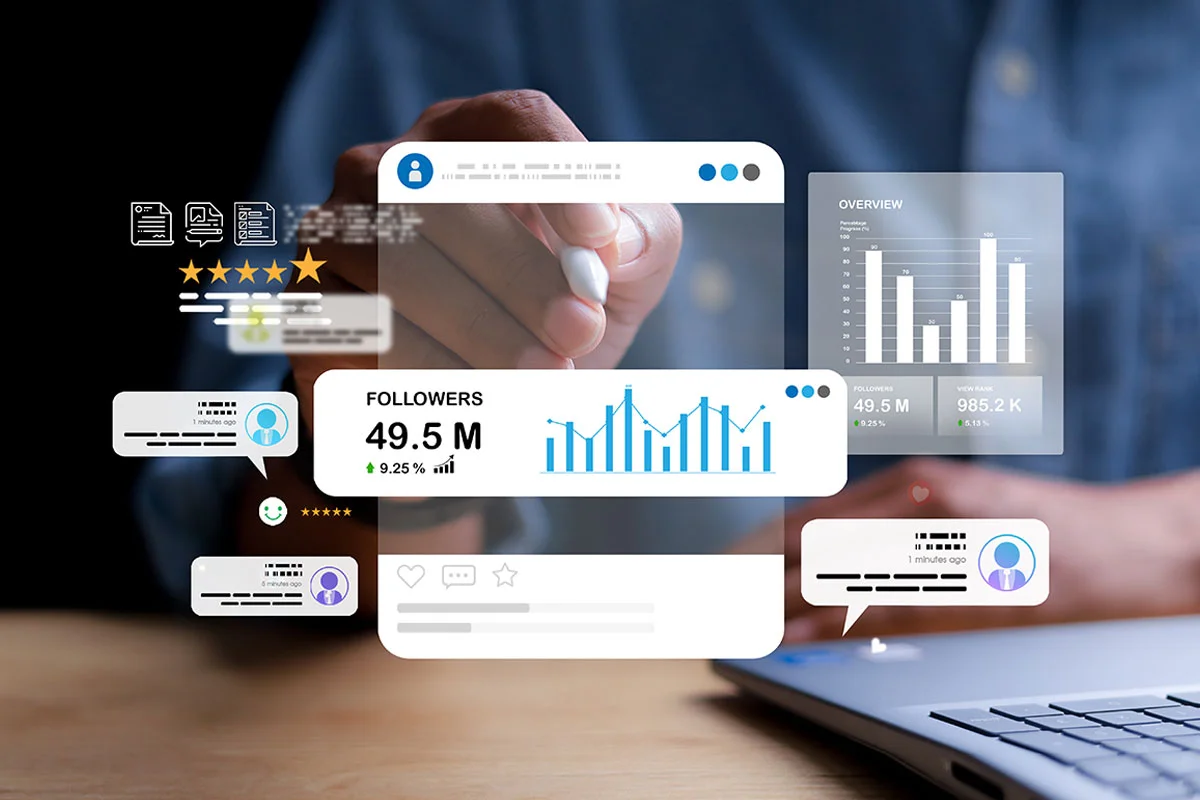
Built for enterprise brand teams, the Social Media Intelligence Dashboard centralizes engagement, sentiment tracking, competitor benchmarking, and executive reporting.
Moreover, enterprise brands manage audience interactions, brand mentions, campaign data, and competitor signals across many digital channels. However, these insights often sit inside separate tools and disconnected reports. As a result, marketing leaders struggle to see brand visibility, audience response, sentiment movement, and competitive performance in one reliable view.
To solve this challenge, X-Byte Analytics developed a custom Social Media Intelligence Dashboard for centralized social analytics. Moreover, the platform tracks audience growth, engagement trends, brand mentions, AI sentiment, share of voice, and content performance in one place. Therefore, teams can reduce manual reporting and make faster marketing decisions.
Result: The client gained a centralized social media analytics dashboard for faster reporting, improved brand monitoring, stronger competitor intelligence, and clearer marketing performance visibility.
“The key was not only collecting social data, but turning it into decision-ready intelligence for brand, content, and leadership teams.”
Jay Bagthariya, Senior BI & Marketing Analytics Consultant, X-Byte Analytics
Client Business Challenge
However, the client needed more than a standard social media report. Instead, they required a centralized social media intelligence dashboard that helped marketing, brand, and leadership teams understand performance faster. Previously, engagement, mentions, sentiment trends, and competitor activity were reviewed across multiple tools. Therefore, teams spent more time collecting data than acting on insights.
Key challenges included:
- Fragmented social media performance data across channels
- Manual effort in campaign and engagement reporting
- Limited visibility into audience sentiment and brand reputation
- Difficulty tracking competitor share of voice and content performance
- Slow access to executive-ready marketing insights
- Inconsistent reporting across teams and business units
- Limited ability to identify trends, topics, and keyword opportunities
Because of these challenges, the client needed a competitive analytics dashboard that could unify social intelligence. In addition, the solution had to automate reporting and support faster marketing decisions. The dashboard was designed to give teams a single source of truth for brand, audience, competitor, and content intelligence.
Key KPIs Tracked
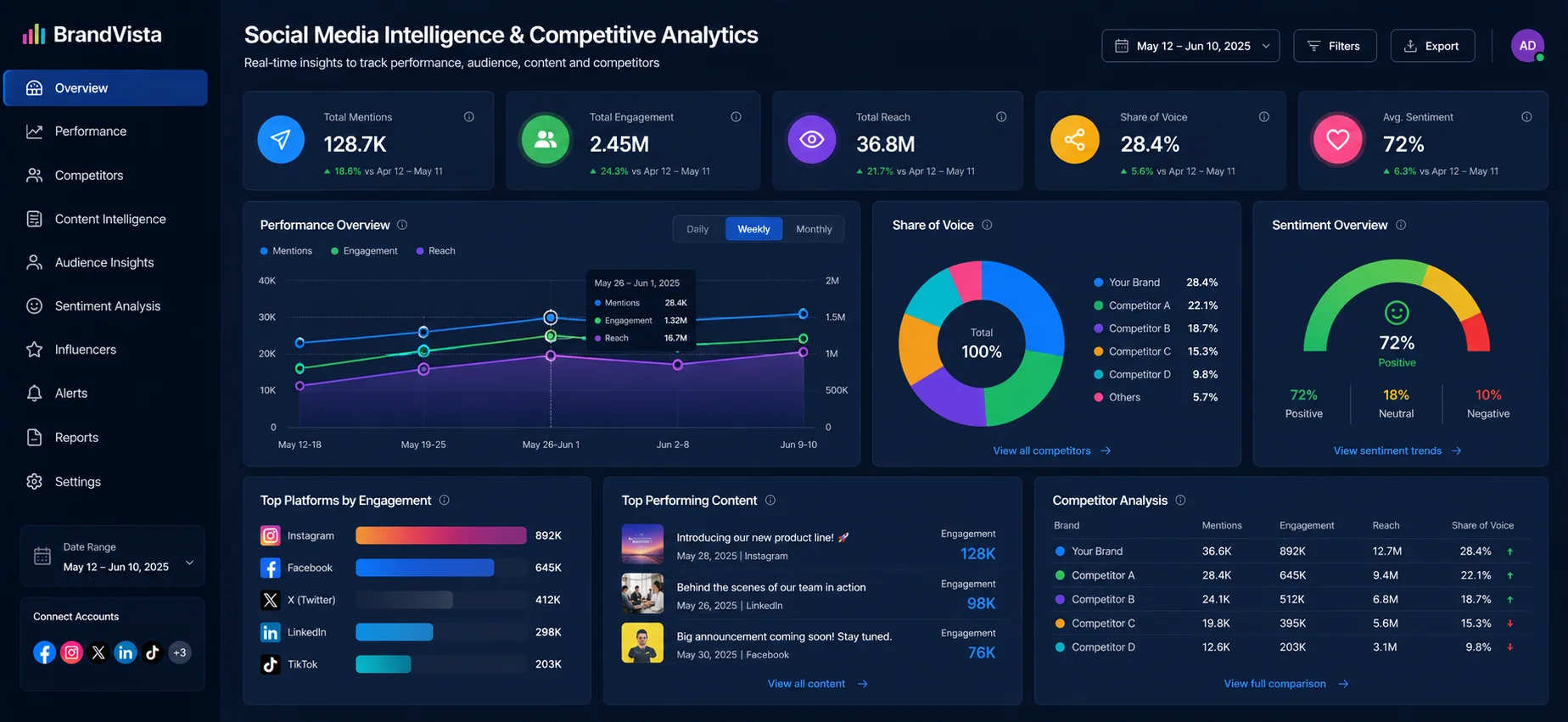
Additionally, the dashboard tracks the most important social media intelligence, engagement, sentiment, competitor, and reporting KPIs. Each KPI helps marketing and leadership teams measure performance, reduce guesswork, and make faster decisions.
Additionally, Audience Growth tracks how the brand’s audience increases across selected digital channels.
- New Followers: Measures newly acquired followers within a selected reporting period. Moreover, Engagement Rate evaluates how actively audiences interact with brand content.
- Likes, Comments & Shares: Tracks key interaction signals across published content.
- Click-Through Rate: Measures how effectively social content drives users to take action. Meanwhile, Brand Mentions tracks how often the brand appears across digital conversations.
- Estimated Reach: Measures the potential audience exposed to brand content or mentions. Similarly, Share of Voice compares brand visibility against selected competitors.
- Positive Sentiment: Measures favorable audience perception across conversations and mentions.
- Negative Sentiment: Identifies reputation risks, complaints, and unfavorable audience signals.
- Competitor Engagement Analysis: Compares competitor content performance and audience response. Finally, Top Performing Content highlights content that generates stronger engagement and visibility.
- Dashboard Usage: Tracks how actively teams use the platform for reporting and decisions.
Solution Offered: Social Media Intelligence Custom Dashboard
Unified Social Data Aggregation

Executive Analytics Dashboard

AI-Powered Sentiment Intelligence

Competitive Intelligence Framework

Content Performance Analytics

Automated Reporting & Insights Distribution

Business Benefits of Social Media Intelligence Dashboard
01
Centralized Performance Visibility
02
Improved Audience Engagement
Better Reputation Management
04
Stronger Competitive Positioning
05
Faster Reporting Cycles
Data-Driven Marketing Decisions
Who Gains Actionable Insights from This Dashboard?
Technology Stack

React.js

Python

FastAPI

PostgreSQL

Elasticsearch

Power BI / Custom Analytics Layer

Azure Cloud

AI & NLP Models
Results Achieved
Key Results:
When Should Your Business Build a Similar Social Media Intelligence Dashboard?
However, your business should consider a custom social media intelligence dashboard if teams rely on manual reports, disconnected tools, or delayed campaign insights. Moreover, this type of dashboard is valuable when brand visibility, audience engagement, competitor tracking, and reputation monitoring directly affect marketing decisions.
Common Readiness Signals
- Social data is scattered across multiple tools.
- Reporting teams spend too much time preparing updates.
- Leadership needs faster access to marketing insights.
- Brand teams need better sentiment and reputation monitoring.
- Competitors gain visibility faster than your team can track.
- Content strategy lacks performance-based decision support.
- Executives need automated reporting and export workflows.
Therefore, a custom social media analytics dashboard helps teams move from reactive reporting to proactive marketing intelligence. Therefore, brands can improve visibility, respond faster, and make campaign decisions with more confidence.
Build a Custom Social Media Intelligence Dashboard for Your Brand
Need to centralize brand mentions, audience engagement, sentiment analysis, competitor benchmarking, and content performance reporting? X-Byte Analytics helps enterprises build custom social media intelligence dashboards for marketing analytics, brand monitoring, competitive intelligence, sentiment tracking, and executive reporting.
Then, talk to our analytics experts and build a dashboard tailored to your brand, marketing, and leadership goals.