
AI-Powered Predictive Maintenance in Oil & Gas for Saudi Client
- Home
- Case-Study
- AI-Powered Predictive Maintenance in Oil & Gas for Saudi Client
Project category
Predictive Maintenance for Oil & Gas Plant
Oil & Gas
Saudi Arabia
6 Months
Unlock Predictive Maintenance Dashboard for Your Oil & Gas Operations.
Project Overview
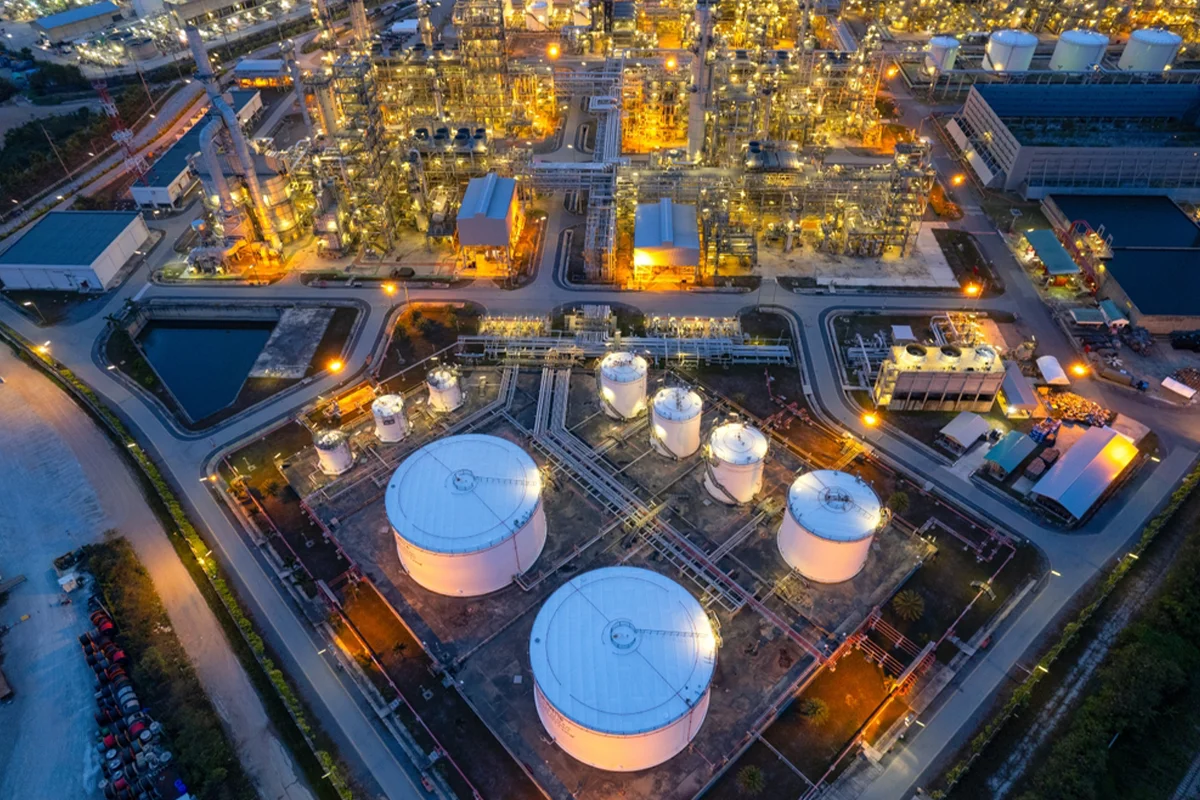
The oil & gas plant was facing frequent unexpected breakdowns of critical equipment such as pumps, compressors, and turbines. These failures were causing significant unplanned downtime, production delays, and higher maintenance costs, directly impacting overall plant efficiency and profitability. Most maintenance activities were reactive in nature, making it difficult to prevent sudden failures.
To solve this challenge, our AI-powered predictive maintenance solution was implemented to continuously analyze 2.5M+ real-time and historical sensor data points from key industrial assets. The system successfully predicted potential equipment failures up to 7 days in advance, allowing the maintenance team to plan repairs proactively. This shift from reactive to predictive maintenance helped the plant reduce downtime, improve equipment reliability, and stabilize production operations.
Main KPIs Tracked
The maintenance team tracked key performance metrics to monitor equipment health and maintenance efficiency:
- Mean Time Between Failures (MTBF): To measure reliability of equipment over time.
- Mean Time To Repair (MTTR): To monitor how quickly repairs are done after a failure.
- Failure Probability (%): AI-predicted likelihood of each asset failing soon.
- Equipment Health Score: Composite score based on sensor data (vibration, temperature, load, etc.).
- Unplanned Downtime Hours: Total hours lost due to unscheduled failures.
- Maintenance Cost Reduction (%): Percentage reduction in maintenance and downtime-related costs.
- Remaining Useful Life (RUL): Estimated working life remaining before the next maintenance/failure risk.
Solution Offered — AI-Powered Predictive Maintenance
We delivered a comprehensive predictive maintenance solution comprising data ingestion, AI modelling, monitoring and visualization layers.
Unified IoT Data Integration & Equipment Health KPIs
- Live data from pumps, compressors, turbines, and rotating equipment is ingested continuously—capturing vibration, temperature, pressure, RPM, load, and flow rate. This ensures every health KPI is updated in real time.
- All incoming data is cleaned, normalized, and mapped to equipment health KPIs, enabling consistent tracking of deviation, performance baselines, and early-risk indicators.

AI/ML Failure Prediction Models
- Machine learning models analyze historical trends + real-time data to forecast component failures and provide a probability score for each asset.
- Every machine is assigned a dynamic health score based on AI-detected abnormalities, comparing current performance with optimal operating conditions.

Automated Anomaly Detection & RUL Insights
- Unusual behavior—such as vibration spikes, pressure drops, overheating, or misalignment—is identified instantly and tagged with severity levels.
- AI models estimate how long each asset can safely operate, helping teams prioritize maintenance based on life expectancy rather than fixed schedules.

Risk-Based Alerts & Maintenance Prioritization
- Alerts are triggered when KPIs cross thresholds—high vibration, rising temperature, abnormal load—enabling immediate action.
- Assets are ranked based on failure probability, severity, and RUL, shifting the plant from time-based maintenance to condition-based maintenance.

Power BI Predictive Maintenance Dashboard & Trend Insights
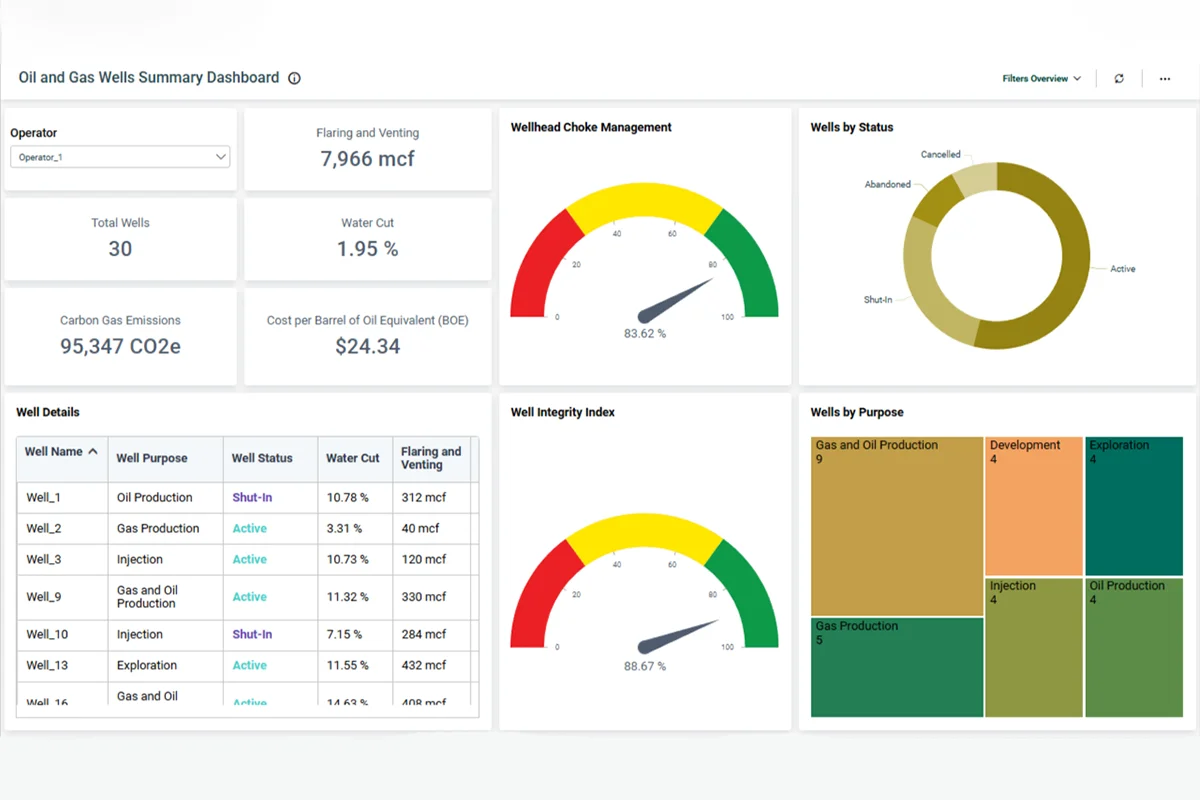
- Predictive alerts, health KPIs, failure probability, RUL trends, and maintenance recommendations are displayed in a unified dashboard for engineers, reliability teams, and operations leadership.
- Teams can compare past vs. present equipment performance, identify recurring failure patterns, and refine maintenance strategies using long-term KPI trends.

Main Features of the Dashboard
The dashboard was designed for both technical teams and plant management, offering clear and actionable visibility:
Business Benefits & Goals
The purpose of implementing predictive maintenance was to move away from reactive repairs and toward proactive, data-driven maintenance planning. This shift aimed at minimizing downtime, lowering costs, and improving overall equipment reliability.
01
Reduced Unplanned Downtime
Early failure prediction helped avoid sudden equipment stoppages.
02
Lower Maintenance Costs
Preventive maintenance reduced emergency repair and spare-parts expenses.
Improved Equipment Reliability
Assets operated more consistently with fewer breakdowns.
04
Higher Plant Uptime
Production continued smoothly with fewer interruptions.
05
Smarter Maintenance Planning
Maintenance teams could plan work in advance instead of reacting to failures.
Who Gains Actionable Insights
Tech Stack Used
The solution was built using a modern data and analytics stack that supports real-time processing, AI modelling, and enterprise-grade visualization. Power BI delivered interactive insights, Azure/AWS handled scalable data pipelines, and SQL/Data Lake enabled efficient storage and analysis of large IoT datasets.

Power BI

Azure / AWS Cloud

SQL / Data Lake
Results Achieved
These results highlight the direct operational and financial improvements achieved after deploying the AI-powered predictive maintenance system.
Key Results:
By moving to predictive maintenance based on AI-powered insights, the plant shifted from reactive firefighting to proactive planning — improving uptime, reducing losses, and increasing long-term operational efficiency.