
Distributor Sales & Inventory Data Standardization Platform
- Home
- Case-Study
- Distributor Sales & Inventory Data Standardization Platform
Project category
Distributor Sales & Inventory Data Transformation Solution
Computer Hardware Manufacturing
United States
3 Months
Ready to unify your distributor sales and inventory data into a single source of truth?

Project Overview
The platform was built for a leading global computer hardware manufacturer managing distributor data from multiple regions, formats, and reporting structures.
A leading global computer hardware manufacturer received weekly and monthly sales and inventory reports from distributors and retailers across multiple regions. Each partner submitted data in different formats, structures, and naming conventions. Consequently, consolidation became a complex and time-consuming process that delayed business-critical reporting.
The absence of standardized data resulted in reporting delays, inconsistent KPIs, and limited inventory visibility. Furthermore, teams struggled to accurately track product sales performance across channels. As a result, demand planning and channel management decisions were made on incomplete or misaligned information.
To address these challenges, X-Byte Analytics developed an automated Sales and Inventory Data Transformation Platform using Python and Power Apps. Moreover, the solution standardized heterogeneous distributor data into a unified schema, validated business rules, and aligned sales and inventory metrics. Therefore, reliable downstream analytics through Power BI and enterprise reporting systems became possible for the first time.
Result: The client gained a centralized, automated data foundation for distributor sales analytics, channel performance management, and reliable inventory intelligence – delivered in 3 months.
Client Business Challenge
The client needed more than a standard reporting fix. They required a scalable, automated data standardization platform that could handle heterogeneous distributor inputs consistently. Previously, sales and inventory data arrived in incompatible formats from dozens of regional partners. Therefore, consolidation teams spent significant time on manual preparation rather than generating business insights.
Furthermore, misaligned data structures created downstream errors in analytics and planning systems. Because manual validation could not scale, data quality issues compounded with each new distributor added to the network. Consequently, leadership had limited confidence in the accuracy of channel performance reports.
Key Challenges That Required an Immediate Solution
- Distributor and retailer sales data arrived in multiple formats with inconsistent product, customer, and inventory attributes
- Manual consolidation and validation processes were time-consuming, error-prone, and delayed business reporting
- Lack of alignment between sales and inventory data limited visibility into stock movement and channel performance
- No automated exception management system existed to flag and resolve data quality issues
- Product and customer master data lacked standardization across regional distributor submissions
- Downstream analytics systems received unreliable data, weakening forecast and planning accuracy
- Increasing distributor volumes made manual processes impossible to sustain at scale
Because of these interconnected challenges, the business urgently needed a Python-based distributor data transformation platform that could enforce data quality standards, automate ingestion workflows, and provide a trusted data foundation for sales and inventory analytics.
Key KPIs Tracked
Sales Performance
- Total Sales Units : Tracks unit volumes sold across all distributor and retailer channels.
- Sales Revenue: Measures revenue generated across regions, distributors, and product categories.
- Weekly & Monthly Sales Trends: Lowest Non-Promoted Price by state, city, and ZIP code; Lowest Promoted Price by state, city, and ZIP code; Regional pricing variance analysis; Geographic price heatmaps
- Sales by Distributor, Retailer & Region: Enables granular channel performance comparison across all geographies.
Inventory Performance
- Closing & Opening Inventory Units : Tracks stock positions at the start and end of each reporting period.
- Inventory Aging & Turnover: Identifies slow-moving stock and measures how efficiently inventory is sold.
- Inventory Coverage Days: Measures how many days of sales current stock levels can support.
- Stock Movement Analysis: Validates actual stock depletion against reported sales transactions.
Data Quality & Channel Performance KPIs
- Data Standardization Accuracy : Measures the percentage of records successfully transformed to the unified schema.
- Data Validation Success Rate: Tracks the proportion of files passing automated validation rules on first submission.
- Sell-In vs Sell-Out Analysis: Compares manufacturer shipments to distributors against end-customer sales.
- Distributor & Retailer Performance: Benchmarks channel partners on sales volumes, inventory compliance, and data quality.
Solution Offered: Distributor Sales & Inventory Data Transformation Platform
Automated Data Collection

Data Standardization Engine

Sales & Inventory Alignment

Data Quality & Validation Framework

Executive Dashboards and Automated Alerts

Analytics & Reporting Enablement

Key Features of the Solution
Automated Data Transformation
Sales & Inventory Reconciliation
Product Master Mapping
Customer & Distributor Mapping
Data Quality Monitoring
Exception Management Portal
Centralized Data Repository
Analytics-Ready Data Model
Business Benefits of the Distributor Data Transformation Platform
01
Faster Reporting Cycles
Manual effort was reduced and reporting timelines were accelerated through automated ingestion and transformation pipelines.
02
Improved Data Accuracy
Enhanced Inventory Visibility
04
Better Sales Forecasting
05
Scalable Data Processing
06
Stronger Business Insights
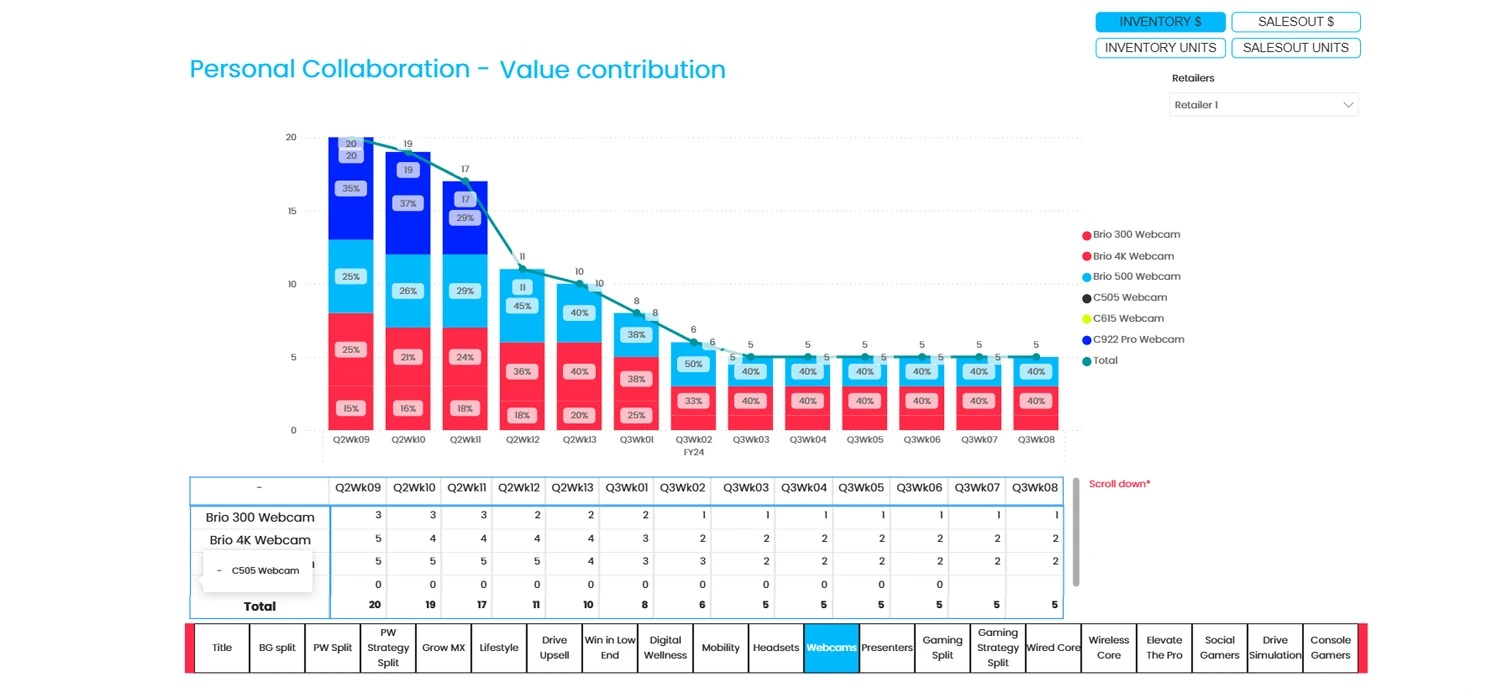
Who Gains Actionable Insights from This Platform?
Technology Stack

Python

Power Apps

Microsoft SQL Server

Microsoft Power BI

Azure Data Factory
Results Achieved
Key Results:
Unified Data Platform
Steps to Automation
Tech Tools Integrated
Multiple Distributor Formats Supported
Zero-Touch Reporting Enabled
Scalable Processing Architecture
When Should Your Business Build a Similar Platform?
Your business should consider a distributor sales and inventory data standardization platform if your teams still depend on manual consolidation to prepare channel performance reports. Additionally, this solution is especially valuable when multiple distributors submit data in different formats, structures, and naming conventions across regions.
Build This Platform If Your Organization Faces These Challenges
- Your data teams spend significant time manually cleaning and consolidating distributor files each reporting cycle
- Your sales and inventory reports contain inconsistencies caused by misaligned distributor data structures
- You lack automated validation to detect missing, duplicate, or incorrect records before analytics loading
- Your channel performance analytics are delayed because data preparation takes too long
- Your product master data and SKU mappings are inconsistent across different distributor submissions
- Your inventory planning team cannot reconcile reported stock levels against actual sales transactions
- Your current data processes cannot scale as you add more distributors or regional markets
Build a Distributor Data Transformation Platform Around Your Business Needs
Need centralized visibility into distributor sales performance, inventory reconciliation, data quality compliance, or channel analytics? X-Byte Analytics helps global manufacturers build custom Python-based data transformation platforms for distributor data automation, channel performance management, and enterprise reporting excellence.
Talk to our data analytics consulting experts and build a distributor sales and inventory data standardization platform tailored to your organization's channel structure and reporting requirements.